Monday, October 27, 2008

TED Moment 2

Though perhaps not the most charismatic or gadget-enhanced lecture on ted.com, this lecture by Paul Awuah is among the most compelling talks I've sen.

Friday, October 24, 2008

Another world is not only possible, she is on her way. On a quiet day, I can hear her breathing.

Most people (EWB Canada and me included), agree that addressing gender disparity is vital to effective/sustainable development.
From some quarters inside EWB, I've heard it put as strongly as "the key to development is getting girls (especially rural girls) into and through school up to the 8th grade."

The United Nations has gone as far as to identify gender equity and the empowerment of women as the 3rd of the Millenium Development Goals.

There is also abundant research that suggests that educated women are a crucial socioeconomic driver; women who have completed primary education generally have fewer children, are less likely to die in childbirth, are less likely to stay in abusive relationships and are more likely to access health care and formal employment opportunities (if you watched the Hans Rosling lecture I posted yesterday, you would have seen a really cool graph illustrating some of these trends. There's also good info available from the International Development Research Center (IRDC) on Gender, Development & Policy).


Here's a new version of the old message put in pretty stark terms by the Girl Effect campaign...


(You can find a bit more info about the campaign here,at the official Google blog.)

So...agree or disagree? is it really as 'simple' as that?

(title courtesy of the eloquence of Arundhati Roy and the old friend who introduced me to to her work)

[Edit: Plan U.K (the parent organization of Plan Malawi) is a supporting partner of Girl Effect. Their campaign, Because I am a girl, has an excellent website, including some facts & figures regarding women, girls and poverty.

Thursday, October 23, 2008

Not Business as Usual: TED moment 1

For those of you who haven't discovered ted.com, I highly recommend you get around to discovering it. It a collection of recorded "ideas worth sharing" (mostly in English) on a mind-boggling array of topics.

One of the more popular TED moments on poverty & development is Hans Rosling's sharing of insights on poverty. Watch the whole thing. If you can't stream it on your connection, download it or leave a note for me and I'll email you the download. Professor Rosling has done a truly amazing job of taking the dizzying array of statistics we use to measure poverty & development and make them 'real' and easy to see.


Wednesday, October 22, 2008

A Million Little Things

Today is the official halfway point of pre-departure training. In another couple of weeks, I'll be on my way to Malawi along with the other 4 people headed to join EWB's sector teams in the country. According to my weather wiki, it's 28 degrees and sunny in the capital city of Lilongwe.

I'm supposed to be catching up on my homework today: we have a presentation to give on The Critical Villager: Beyond Community Participation, a book that is described by a past EWB volunteer as "a book which is intermittently in print purely because Parker Mitchell, co-CEO of EWB, orders so many copies." I think the book might actually have some traction outside of EWB, but I digress...

Rather than thinking constructively about my homework, I find myself more interested in reflecting a bit on my experiences so far. I think that sharing some of my observations with you fine people might help me get back on track. So, without further ado...

1. Of course one of my political fantasies comes to pass just in time for me to miss the election night party. Pfft.

2. My friends and family at home are amazing. In particular, amazing by phone, by facebook, by fundraising support, by farewell party (though not necessarily by posting photos of that party...) and by gifts for Africa that have already made my day (including a lot of advice).

3. Case in point: the furnace pilot light for the house wasn't lit when we arrived. We noticed yesterday when room temperature slipped to a chilly 14 degrees. After some tinkering (living with a bunch of engineers has its perks), we got it working and are now enjoying the pleasant sensation of central heating. In the meantime, however, I was lucky enough to have my very own microfibre travel blanket.

4. Many hands really do make light work. During pre-departure training, we've been learning a lot (since Monday morning, we've done training sessions on the history of the development sector, frameworks for understanding behaviour change, agriculture, effective writing, and understanding power & privilege). It's a lot of information to take in, and being able to work/share with the incredible group of people in this sending group has definitely made my life easier.

5. It's really hard to wrap your head around switching continents. I have my e-ticket booked, I'm halfway through a training module designed to get me to prep myself for departure, and I'm in regular contact with my coach (aka my EWB supervisor) overseas, and I'm still not really processing the fact that I'm going to Africa for a year. Go figure.

6. There are a lot of restaurants in Toronto. I know that seems obvious, but so far I've eaten Vietnamese twice, Thai twice, sushi, Indian, Italian twice, Second cup sandwich once, Chinese bakery once, pizza, shawarma, soda jerk diner ham & eggs, Duff's famous wings, Portuguese bakery breakfast, Starbucks snackfood of some kind, and a Portuguese deli sandwich. I've only return visited one restaurant so far and I've grabbed coffee from two different Second Cups, one Starbucks and two independent places. I'd like to do more independent/fair trade coffee places, but they're surprisingly difficult to find unless you know where to look.
And that doesn't even get into the home-cooked meals. Some of the guys here like to cook (and some peoples' moms are taking really good care of us), meaning that feasts of pasta & home-made sauce, French toast, curry, samosas, pakora and TRUFFLES!
Delicious. Not necessarily nutritious, but definitely delicious.

7. Last (and probably least), Canada is a really pretty country in the fall.

Wednesday, October 15, 2008

Blog Action Day - Poverty Edition

Though most of us have probably gone to bed by now, I and my fellow Canadians spent some of the evening of October 14th (and in my case, the first hours of October 15ht) watching the latest federal election results come in.

As much as it can be hard to keep the bigger picture in mind on nights like tonight, it's important to remember that we elect politicians to take care of some pretty important 'big picture' decisions.

One of those big pictures, in my mind at least, is poverty alleviation (both at home and around the world).

Today is Blog Action Day. It's a chance for bloggers from around the world to spend some time discussing/pontificating/posting pretty pictures on a single issue: poverty.

Though even defining poverty can be a pretty complex task and the causes are equally complex, I think we can agree that it's an important issue to tackle as we go forward (particularly as the current troubles on the world financial scene continue to put pressure on everyone). I encourage you to surf the other Blog Action Day contributors for discussions on definitions. I want to tangent a bit and briefly raise a different part of the picture.

Over the course of the next year, I/the organization I work for has the potential to be directly affected 3 elections (not counting the American election, which arguably affects us all with varying degrees of directness). Canada, Ghana and Malawi will all be dealing with the consequences of national elections in the coming months. I wonder, will these governments be expected to renew commitments to prosperity for their citizens or even for the global community?

Hard times are ahead, and I think it's incumbent upon us all to make sure that it's not just a small minority of concerned citizens "getting involved" to do whatever it is we're going to do to face tough, 'big picture' questions like how to tackle global (and domestic) poverty, but also that our elected representatives continue to be expected to make just decisions even in the face of such challenges.

As Demosthenes, an old Greek favorite of mine, once said:
Small opportunities are often the beginning of great enterprises.


Making democratic contributions often feels like a hopelessly small opportunity - be it through voting, writing a letter to your elected representatives, getting involved in your community league, volunteering with a citizen's action group of some kind or even just discussing your thoughts in public - it can eventually make a difference. That's what the system is for - it's our job to undertake the great enterprise of making it work for us.


Saturday, October 11, 2008

Human Development - Know it, Love it, Measure it

Awhile ago, I touched on the concept of human development. The time has come for me to touch on the idea properly, and ruminate (in the form of a blog post, as it happens) on some selected complexities.

According to the United Nations (specifically, according to the UNDP Human Development Concept), human development is...

about creating an environment in which people can develop their full potential and lead productive, creative lives in accordance with their needs and interests. People are the real wealth of nations. ... It is thus about much more than economic growth, which is only a means—if a very important one—of enlarging people's choices.


That is the definition that EWB Canada uses to guide the focus of their work; in particular, EWB Canada holds that a fundamentally important part of creating such an environment is the building of human capacity.

Yesterday afternoon, the group that I'm doing pre-departure training with participated in a group workshop aptly titled "what is development?" As part of the exercise, we each had to come up with a personal definition of human development and then work together to point out some common and contradicting themes or keywords in our definitions.

My definition was...

(Human) development in the international context is increasing the human capacity to manage vulnerabilities in order to maximize the ability to attain & maintain a good quality of life (with some subsequent brainstorming on what exactly I meant by "good quality of life").


Here's a fun graphic outlining some of the concepts we touched on while sharing/discussing the different definitions that showed up (kudos to Ryan, one of the people in my sending group, for hooking us up with wordle)


Coming from political science land, it was interesting to me that words like "system," "global reality," "economic," "security," and "justice" didn't come up more often (even from me). Discussions about international development (not quite the same as human development, but in the same semantical galaxy, anyway), that I've had in the past have usually resulted in much more diverse connotations (usually in the form of a more explicit focus on access to markets, prosperity, or good governance as a key condition of successful development). As a group, our unit of analysis was definitely at the individual level - we're all about choices and personal growth on Day 3 of training. Community and national capacity weren't really brought up at all.

We also didn't get much into measuring human development; that was probably because the workshop was supposed to be about what it is more than about how it's quantified, and it's an important question that I think we'll get to later (I think that EWB might see that as more of a skill than a fundamental concept in terms of training).

So what is this human development thing, exactly? How do you do it? How do we know when we're doing a good job of it?
Good questions - and exactly where this gets tricky. While creating an environment where people can live up to their full potential is all well and good on paper, what does that look like, really? Does it mean literacy? Mobility? Who does the creating? For which people?
We certainly didn't come up with a nice, sound-bytey answer, and I don't think that the international community has either.

But even if we don't really know exactly what human development is, we sure can measure it!

The international standard for measuring this vague, complex and often contradictory notion of human development is the Human Development Index (HDI). The HDI is a composite index of normalized indicators (statistics collected, usually at the national level) that are used to calculate whether a country is classified as developed, developing or underdeveloped. The first HDI report was released in 1990, and has had some pretty far-reaching implications for development ever since (it's used regularly by the United Nations & other bodies to assess all kinds of things).

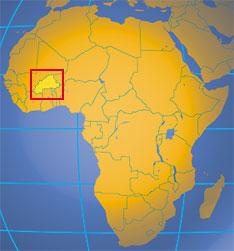
Using statistics like literacy, infant mortality, GDP per capita, life expectancy, etc., the HDI ranks 177 countries by aggregate score. This sending group of EWB-Canada volunteers are going to Ghana, Burkina Faso, and Malawi. According to the 2007/08 HDI Report [.pdf], these three countries rank 135 (up from the last report), 176 (down from the last report), 164 (up from the last report) respectively. Ghana is classified as developing; Burkina Faso & Malawi are categorized as underdeveloped.

It will be interesting to get into some of the strengths & weaknesses of the HDI with this group of volunteers (and share those discussions here) later in the month as well as to see what "underdeveloped" looks like on the ground once I touch down in Lilongwe.

If you're interested in learning a bit more about the HDI (or like pictures better than long reports), here's an interesting map to get you started.

Wednesday, October 8, 2008

Touchdown in T-Town


So, after a nice early start (6 a.m. takeoff... yay) I arrived in Toronto this morning. A nice, scenic, multiple-transfer public transportation trip got me to the EWB Learning House, where I'll be living for the next month during pre-departure training with the other 9 people in my sending group.

Training has formal programming from 9 to 6 five days a week (with some longer days, some shorter days, some weekend days and a bunch of homework). I'm looking forward to such an intensive opportunity to learn, to prepare (and to blog!).

Sunday, September 28, 2008

Earrings for Africa! - Update III


(Recap: Earrings for Africa! is a fundraising project that my good friend Jenna is spearheading to help me as I prepare to take off on EWB's dime). And is nearly wrapping up, as I leave Edmonton today to spend some time with my family before I take off properly.

I'm really grateful to everyone for your support.

To the point then...
Fundraising Goal (not just the jewelry, but in total): $750.00
Day 44
Number of people in the facebook group: 72 (down from a peak of 75, and still pretty awesome)
Number of items created (including several non-earrings and thanks to the efforts of a number of my crafty friends): a lot. Probably close to 50, but I don't feel like updating the Excel formula to find out.
Number of items sold (thanks to the support of all kinds of wonderful people): 40
Funds raised so far: $543
Number of donations (many more thanks): 5 (not including people who told us to "keep the change")

I am, at this point, waiting to hear back from some of the letters I've sent. With any luck, that will be enough to put us over the $750.00 mark. If not, I'm still really grateful for your support. $500 is a lot.

We will still be selling the last few items we made, if people are interested.

Either way, sorry for the post drought in September (it's been a busy couple of weeks). I promise this blog will actually have interesting things to read on it from now on (as in, not fundraising updates ;-) ) starting with my next post (which will be up next time I have internet access).

Til then, thanks for reading!

Friday, September 19, 2008

MSF - Edmonton event this weekend

While taking a walk along Whyte Avenue this afternoon, I stumbled upon a really interesting educational event.
MÉDECINS SANS FRONTIÈRES/Doctors Without Borders is touring a Refugee Camp in the Heart of the City. They're in Edmonton (McIntyre Park, in Old Strathcona by the farmers' market) until Sunday (9:30-5pm) and providing tours (free of charge) to willing passerby. The tour is really good - in addition to talking about the work that MSF does, the guides try to get visitors to think about what it must be like to be uprooted and end up in a refugee camp. The guide for our group had actually done work in a clinic is the southern Sudan: the kind of insight she shared with us was amazing.

MÉDECINS SANS FRONTIÈRES (MSF), aka Doctors Without Borders, is a Nobel Peace Prize-winning non-governmental organization dedicated to providing emergency medical relief, particularly to refugees and internally displaced persons (IDPs). They've been around since 1971, and blazed a great many trails in disaster relief and humanitarian assistance (some of them more controversial than others).

Walking through the camp really got me thinking about the work I'm about to be embarking on. In many ways, I'm fortunate this time around - EWB Canada targets their efforts to capacity building in more stable communities, so it's unlikely that I'll be dealing with the realities that MSF volunteers confront overseas, especially in camps like these where violence and rampant illness & malnutrition are common. It really gave me an interesting perspective on the kind of challenges I'll be confronting.

Check it out if you have the time.

Wednesday, September 10, 2008

The Plan (wait for it, here comes a pun...)


Looks like I'll be joining the EWB Water and Sanitation Team as a volunteer with a new partner agency: Plan Malawi.

Plan Malawi is part of Plan International, an international NGO primarily concerned with improving the lives of children in developing countries.

As a new partnership, some of my time with Plan Malawi will be spent assessing the existing and potential opportunities for collaboration between EWB and the organization. For the rest, I'll be working with Plan and with rural communities in Malawi to try and improve access to sanitary water and facilities, reducing the risk of various illnesses.
Though I'm not 100% sure of the details of the projects that PlanMalawi is working on (the internet is a bit scarce - apparently Google doesn't know everything...), it looks like we'll be working with an approach known as Community Led Total Sanitation (CLTS).

I'm really looking forward to working with an agency that puts such an emphasis on children. I just hope I can get up to speed fast enough to be more of a help than a hindrance to them in their work.

Friday, September 5, 2008

Earrings for Africa! - Update II


(Recap: Earrings for Africa! is a fundraising project that my good friend Jenna is spearheading to help me as I prepare to take off on EWB's dime)

The thanks continue! Your support has been fantastic so far.

To the point then...
Fundraising Goal (not just the jewelry, but in total): $750.00
Day 30
Number of people in the facebook group: 70 (!!!)
Number of items created (including several non-earrings and thanks to the efforts of a number of my crafty friends): 38
Number of items sold (thanks to the support of all kinds of wonderful people): 21
Funds raised so far: $156
Number of donations (many more thanks): 2 (not including people who told us to "keep the change")

The making things has slowed down a bit (yay school...) but we'll be putting up more photos today. We also hope to take some of the old ones down/replace them over the weekend.

In the realm of other fundraising efforts, I'll be writing some letters over the next week or so (once I finalize who I'm writing them to...). Hopefully that'll be enough to surpass my goal.

If you know of anyone who is not on facebook that might be interested in supporting our fundraising efforts (or just likes shiny jewelry), please feel free to get them to email me. I'd be happy to send them photos via the bits of the internet that aren't facebook.

And last but not least, if jewelry isn't your thing, we do accept straight-up cash! ;-)

Many thanks again!

Thursday, August 28, 2008

So... Malawi?

(note: Most of the country links will take you to a map of Africa with the country highlighted.)

Here's some interesting information about Malawi that I've collected as part of my pre-departure training and/or that I remember finding interesting during my BA.

Let's start with the most important detail of all (as far as my rural Canadian upbringing is concerned): the weather.
I will be arriving in Malawi at the beginning of the rainy season, which runs from
November to May. Though rainfall and temperatures vary (depending on altitude, nearness to the lake, latitude, etc.), the country averages 725-2500 mm of rain per year. The rainy season also happens to be the hottest part of the year (yay...) so it'll be nice and humid when I arrive. That being said, all the weather sites I've checked say that temperatures don't tend to go much higher than the high thirties, so it might not be so bad.
The dry season tends to be cooler (depending on where you are, it can get down to about 6 degrees Celsius at night), with daytime highs capping around 25 degrees Celsius.

Anyway, the political science nerd in me wants to move over to the facts and figures, so here we go.

History in Brief
The Republic of Malawi gained independence from Britain in 1964 (after decades of effort on the part of Malawians to establish an independent state). From 1964 to 1994, the country was governed as a one-party state by "His Excellency the Life President Ngwazi Dr. Hastings Kamuzu Banda."
I'm going to gloss over Malawian politics for now (mostly because they're fascinating and I want to devote a whole post to them later). Suffice to say that the country has had two presidents since Dr. Banda. The current president is Bingu wa Mutharika and the next general election (presidential and national assembly) is slated to take place in May 2009.
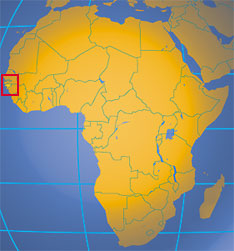
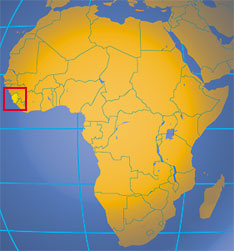
Malawi currently ranks 164/177 on the UNDP Human Development Index (HDI): it is therefore categorized as a country with "low human development" and is considered to be one of the twenty poorest countries in the world (the three poorest/least developed being Guinea-Bissau, Burkina Faso and Sierra Leone). (more on the HDI later) In 2006, Malawi was approved for relief under the Heavily Indebted Poor Countries (HIPC) program through the World Bank.
Agriculture (especially tobacco) accounts for more than one-third of Malawi's GDP and 90% of export revenues.

Fun(ish) Facts

Offical Languages: English and Chichewa

Capital city: Lilongwe

Biggest city/Urban economic centre: Blantyre

Geographic size: 118,480 sq km (the CIA world factbook helpfully informs us that this is slightly smaller than the state of Pennsylvania)
est.

Population: 13,931,831 (compared to Pennsylvania's 12,440,621)

Life Expectancy:
total population: 43.45 years
male: 43.74 years
female: 43.15 years

Religions:
Christian 79.9%, Muslim 12.8%, other 3%, none 4.3%

Literacy: (defined as those age 15 and over can read and write)
total population: 62.7%
male: 76.1%
female: 49.8%

Per capita GDP (PPP): $800 (Canada's is about $38,400)

Major exports: tobacco, tea, sugar, cotton, coffee

Major imports:food, petroleum products, consumer goods, transportation equipment

Economic aid: recipient of approx. $575.3 million annually

External debt: approx. $894 million (Canada's currently sits at about $758 billion - not that it's a helpful comparison, really)

Currency: Malawian kwacha (MWK)

Current exchange rate: Malawian kwachas per US dollar - 144.400

Interesting Trivia
One of the most striking geographic features of the country is Lake Malawi (aka Lake Nyasa if you're in Tanzania) which runs along the eastern border of most of the country. Lake Malawi is the ninth largest lake in the world and part of the East Rift Valley lakes system. Lake Malawi is also one of the most biodiverse freshwater systems in existence, hosting more fish species than any other single lake in the world.

Malawi has a national cricket team which has placed fourth at the African championships in two consecutive appearances.

On August 16, 1914, Lake Malawi saw a brief naval engagement when the British gunboat Guendolen, commanded by Captain Rhoades, heard that World War I had begun and received orders to "sink, burn, or destroy" the German Empire's only gunboat on the lake, the Hermann von Wissmann (at the time, Malawi was the British protectorate Nyasaland and Mozambique/Tanzania were the German protectorate known as German East Africa(. Rhoades's crew located the Hermann von Wissmann and disabled it with a single shot from a range of 2,000 yards. Apparently, it was a big deal at the time.

HIV/AIDS prevalance (as of 2003) stood at about 14.2% with an estimated 900,000 people living with AIDS. Malawi has the 8th highest prevalence rate in the world, behind Swaziland, Botswana, Lesotho, Zimbabwe, South Africa, Namibia and Zambia. In 2003, the annual estimate of HIV/AIDS related deaths stood at 84,000.

Travel Advisory: There is no official warning at this time. Travelers are, however, advised to "exercise a high degree of caution."

Sigh... yes, Malawi is perhaps best known at the moment for being home to Madonna's adoption saga.

(thanks to the CIA World Factbook, Wikipedia, voyage.gc.ca,certain pages maintained by the Government of Malawi including the National Statistics Centre and various arms of the United Nations.

As sure as it gets.

Looks like I'll be working with PlanMalawi in the water & sanitation sector of developmenty-type things.

I'll be posting some additional info later. Right now I have to call my mom and dad! :)

Friday, August 22, 2008

95%


There's been a minor delay in the matching process for OVS (which is fair, since I've been holding up the show with a major delay with my forms), but my placement is about "95%" sure.

Stay tuned for the "99%" sure announcement early next week!

Wednesday, August 20, 2008

Earrings for Africa! - Update

(Recap: Earrings for Africa! is a fundraising project that my good friend Jenna is spearheading to help me as I prepare to take off on EWB's dime)

First of all, thanks so much to everyone who joined the Facebook group, invited friends, or bought jewelry in these first two weeks. I'm really, really grateful for your support.

Here's a brief update, by the numbers:
Day 14
Number of people in the facebook group: 38
Number of items created (including several non-earrings andthanks to the efforts of a number of my crafty friends): 35
Number of items sold (thanks to the support of all kinds of wonderful people): 16
Funds raised so far: $106

If you know of anyone who is not on facebook that might be interested in supporting our fundraising efforts (or just likes shiny jewelry), please feel free to get them to email me. I'd be happy to send them photos via the bits of the internet that aren't facebook.

Thanks again for your support! Those are amazing results for two weeks in the summer.
I'll post another update in another couple of weeks (which will hopefully include some updates that involve me doing other stuff to raise the funds).


PS: No word on where or what yet. I expect to hear back in the next two weeks or so.

Thursday, August 7, 2008

Not an Engineer. Not a Problem.

When I tell people that I'm going to be working on a development project for Engineers Without Borders Canada, I often get some version of this response:

"That's great!"
[pause, and a puzzled look]
"I didn't know you were an engineer..."

That's where the plot thickens: I'm not an engineer. My degree doesn't leave me with a professional designation (as one ill-fated ad campaign once said, I can "Be Anything" with a Bachelor of Arts. Har, har).

So what's an organization called "Engineers" Without Borders doing hiring a specialty-less Arts student-turned-adult like me?

EWB Canada (and for that matter, other EWBs) don't exclusively work on technical projects requiring the highly specialized skill sets of Western-educated engineers. Though all of their projects have technical components, the organization approaches those projects from a the starting point of working towards human development.

According to the United Nations, human development is...

about creating an environment in which people can develop their full potential and lead productive, creative lives in accordance with their needs and interests. People are the real wealth of nations. ... It is thus about much more than economic growth, which is only a means—if a very important one—of enlarging people's choices.

(taken from "The Human Development Concept," UNDP edition)
Apparently, I strike the folks at EWB as someone who might be good at helping to create environments in which people can develop their full potential and lead productive, creative lives in accordance with their needs and interests. That, in a very vague nutshell, is why I was offered this opportunity.

In a more specific way, there are a list of attitudes that EWB looks for in candidates for overseas placements available here. Those of you who know me already can probably judge for yourselves whether or not you think I might be creative, enthusiastic, or possessing "ruggedness." Those of you who don't will have to judge for yourselves over the coming months. In my application and interview process, I would say passion, empathy and adaptability were characteristics that were definitely stressed over and above technical proficiency.

One of the many things on my list of things to learn and do before I arrive at my placement is to deepen my understanding of what EWB Canada is aspiring to achieve with a people-first, project-driven approach to their overseas work as well as to achieve a deeper understanding of what participating in a human development project means to me (the good and the bad).

At the moment, however, we seem to still be in the "attitude is everything" phase. Actually getting a sense of "how to" is buried in the hundreds of pages of pre-departure resources that EWB has kindly sent along to keep the boredom at bay this summer.

Tuesday, August 5, 2008

Earrings for Africa!

As part of my placement with EWB, I'm expected to do a bit of fundraising.

My good friend Jenna, being amazing and all, has decided to sell hand-made jewelry (that she normally makes and distributes as wonderful gifts) and donate the proceeds to EWB.

Check out the Facebook Group or leave questions here for details!


The Story So Far...


For those of you who don't know her, Amanda (aka me - this post will probably be the only one that I write in the third person) is a recent graduate of the University of Alberta, holding a Bachelor of Arts with a double major in Political Science and Middle Eastern & African Studies. She was recently offered a position volunteering overseas with Engineers Without Borders Canada (EWB), a non-governmental organization (NGO) dedicated to poverty reduction through capacity building in the developing world and raising awareness in the developed world (especially Canada).

Without further ado, here's the scoop so far...

November 2004 - Amanda volunteers at a U of A Students' Union High School Leadership Conference where one of the keynote speakers is a returning Junior Fellow of EWB. She's, as they say, hooked.

Winter 2005 - Amanda attends a paltry 2 EWB events put on by the U of A Chapter.

March 2005 - Amanda gets roped into 2 jobs, likes one of them better than the other, and disappears into the inner workings of the U of A Students' Union, with her free time going to the U of A High School Model United Nations Conference (and not, as it happens, EWB).

Summer & Fall 2007 - Escape from full-time work! The return to full-time studenthood means more free time. Kind of. Amanda renews her connections with U of A EWB, attending events casually and helping a bit with certain awareness events held on campus.

January 2008 - Amanda has a chat with a friend (we'll call him "Jamaal") where she is encouraged to apply to volunteer with EWB.

Reading Week 2008 - She does.

March 15th - May 10th 2008 - Two phone interviews and one in-person interview (aka a whirlwind trip to Toronto) later, Amanda is offered a position as a long term OVS and jubilantly accepts. A great many people have already been tremendously helpful and supportive. Thanks to you all (I think I've thanked you all individually already. If not, I'm sorry and thank-you very, very much for your help and encouragement).

May - July 2008 - The paperwork starts, including a matching survey designed to help EWB identify placements on projects/with partner organizations that have the best chance of the most success, based on a variety of factors (and years of experience).

[Aside: As of right now, I know the following:
Contingent on not having anything awfully unexpected happen (like not being eligible for a passport or something), I will be working with EWB and a partner organization operating locally in Africa on a development project. I will be leaving Edmonton in early October for approximately a month of pre-departure training in Toronto before I leave for my placement in early to mid-November. I will be gone for about 12 months and return to Canada after that to debrief and figure out my next steps.
I will know more about all that (like narrowing down from "Africa" to a country and "development project" to at least some field of work if not an actual, specific project) in a month or so.]

August 2008 - December 2009 (and beyond? who knows?) - Stay tuned to this blog to keep updated on Amanda's activities and musings related to her work with EWB. In particular, stay tuned for the following three things (in chronological order):

1) A series of posts on Amanda's take on issues related to development work generally and a sort of introduction to the field.
2) Real-time (ish) updates on interesting things that happen in the lead-up to departure. This will eventually include the much-anticipated announcement detailing where she's actually going and what she's actually doing. Expect some things on the blog (the news and the title, for instance), to change as this information becomes available.
3) Notes from the field, updated as regularly as possible.

Cool, eh?

Thursday, July 24, 2008

C'est Feu Continu


I have this coffee table book called A Turning Point: Images to Words that I bought in the United Nations gift shop a few years ago.
In that book are many quotes accompanying many brilliant photographs by a photographer named Victor Gagliardi. At various moments in my life since I brought it home with me, I have been inspired in turn by many of those quotes and pictures.

And what, you ask, does any of this have to do with giving my blog a home at feucontinu.blogspot.com?

Well, that would be this quote, by French author Jean Giono:

Do you know what creation is?
It is feu continu (uninterrupted fire).
You simply keep on going,
taking up each day from where you ceased.
What you insist on calling genius in me is artisan.
My father was a shoemaker.
So I am to the last.

I think that the idea of uninterrupted fire is a really powerful metaphor for what I'm supposed to be trying to do with the next 18 months or so of my life.

In doing development work, many people (mistakenly, in my opinion) believe that the purpose of every project - every school, every well, every book drive, every World Vision child sponsor - is to change the world. As if by vigorous efforts in a single place in a single time will somehow cascade into more vigorous efforts in other single places in other single times and that somehow, all together they will result in a grand cascade of 'change' heard round the world.

Don't get me wrong. I do believe that this work can change the world. But I think that expecting every single thing we do to catalyze sweeping changes and improvements is a bit short-sighted. Enthusiasm for that kind of work burns brightly, yes, but it also burns quickly, and leaps chaotically from place to place, often burning out before the work is done. There's no persistence possible when one believes in change alone.

Over the coming months, I hope to share with you the privilege of being part of a project that, yes, at its heart, is founded on a belief that change is possible and can be done in this way (that is, through development projects and enthusiastic volunteers). But I also want to remember that it is change in small increments and born of ceaseless effort. Success is not simply measured by change, but also by persistence.

--------------------

(Unrelated note: If you have a few minutes to spare some time, I highly recommend reading Giono's short story L'homme
qui plantait des arbres (The Man Who Planted Trees). I've linked to an English translation here.)


DISCLAIMER

The point of this blog is to share my experiences and perspectives on my experiences as an OVS, the politics of my world, the wonders and tragedies of my communities, and anything else that finds its way into my average little head. Keyword: "my."

The opinions expressed on this blog represent my own and not those of my employer or any organization I may be affiliated with.

In addition, my thoughts and opinions change from time to time. I consider this a necessary consequence of having an open mind and a natural result of the experiences that this blog chronicles.
Furthermore, I enjoy reading other peoples' blogs, and commenting on them from time to time. If you run across such comments, the opinions expressed therein also represent my own and not those of my employer or any organization I may be affiliated with, nor should you expect the views in those comments to remain static for all time. Feel free to draw your own conclusions about my formal political leanings and affiliations from the slant of those blogs, with the understanding that those conclusions are probably wrong.

(props to daveberta for inspiration on the wording)