Showing posts with label Malawi. Show all posts

Friday, April 24, 2009

The road goes ever on and on...

News is, I think, best delivered as band-aids are removed; suddenly and quickly with some time set aside to deal with the aftermath.

Out with it then… after some serious contemplation and for a variety of reasons, I have decided to end my placement with Engineers Without Borders Canada early and return to Canada.

The behind-the-scenes preparations for my return to Canada have been in the works for some time already. I delayed announcing this to the wider internet until after I had communicated my decision to my friends and family and to both of the organizations in question.

After wrapping things up at home and at work in Nkhamenya, I will be spending a few days in Lilongwe finishing up handover notes and having some transitional meetings with other members of the EWB staff. From there, I’ll be heading home via Toronto. I’ll be leaving Lilongwe on the afternoon of May 5th and arriving back into Toronto on the afternoon of May 6th. I’ll likely be back in Edmonton later that week.

Though this has at times been a challenging and even occasionally a frustrating experience, I have also found it immensely rewarding. I have been humbled to work with the amazing team of overseas volunteers currently working for EWB am deeply grateful to Engineers Without Borders Canada and to Plan Malawi for facilitating this opportunity. It has been my great privilege to contribute to the work of these organizations and also to work alongside their staff. I have been very impressed by the warmth and support shown to me by my colleagues at Plan, and by the friends I have been lucky enough to make while working and living in Malawi.

I will carry the experiences I've had and the people I've met these past few months with me for the rest of my life.

Thank-you for sharing this journey with me. Here’s hoping I see you on the next leg.

" The Road goes ever on and on
Down from the door where it began.
Now far ahead the Road has gone,
And I must follow, if I can,
Pursuing it with eager feet,
Until it joins some larger way
Where many paths and errands meet.
And whither then? I cannot say. "

(h/t to J.R.R. Tolkien for writing what I meant to say before he shuffled off bound for Grey Havens of his own)

[PS: Once I’ve gotten back into gear in Canada, I will be re-designing and re-purposing this blog (have no fear – I do have a design and a vague sense of purpose in mind).]

Friday, April 17, 2009

Easter Weekend

I know this is a week late - I'm sure you'll get over it.
I had a noteworthy Easter in Lilongwe. I got to spend some quality time with a number of other EWB types including Mr. Kang, my good friend Colleen, Alynne, Megan, Anna-Marie, and Garrett (whose blog I haven't been able to scrounge up. Lettner, Ashley and Enam were also around a bit, but they missed most of the hijinks.

Work was done (as Mike can tell you) and fun was had. There was a delicious eggplant BBQ with guacamole made from fresh avocados - the avocados are plentiful and GIGANTIC these days.

There was also an Easter Sunday spent attempting to make kites which quickly morphed into a paper airplane making contest on account of not having any string which in turn evolved into a series of attempts to make branded EWB airplanes = flying light bulbs for short.


And while retreat was not too long ago, it was really nice to see people again. Friends are great to have and great to see often, and I had some quality time with the ones that made it to Lilongwe. It was really great to have the quality time.

(Oops... I never did tell you about the monkeys, did I? Sorry about that...)

Thursday, April 9, 2009

Movie Night in Malawi

The Prelude

I was eating dinner in the Rise & Shine Diner the other day. It's a frequent haunt of mine (I think I've become addicted to the nsima with beef relish. soooo tasty).

I wasn't in any hurry, so I sat around for a bit visiting with my friend Nelli and Zealous, the niece of the owners of the diner. Zealous is in town visiting over the Easter break, which lasts three weeks in Malawi. The diner was pretty quiet - this was around 5:30 pm, which is a bit early for supper in Malawi.

While we were chatting, someone put in a Nigerian movie.

A bit about Nigerian Movies

When I say "Nigerian movies" I do mean movies made in Nigeria. But leaving it at that is like describing Bollywood movies as "movies made in India." Nigerian movies are their own genre.

Sometimes referred to as Naija movies or Nollywood movies, Nigerian films are usually English-speaking, multi-part movies with slapstick comeday and crazy melodrama. They often involve witchcraft and/or the tension between 'traditional' and 'modern' Africa. They often come in 4 or 5 or 6 in 1 packs of DVDs, so you can watch the whole series of film in one go.

I could say more on these lovely gems... but I won't. Instead I'll tell you about the one that was flipped on in the Rise & Shine.

Unfortunately, I can't remember the exact title of this one... I think it was "Aziwa II."

The Plot
This Nigerian movie was a remake of Pocahontas. And not just any Pocahontas - this one was based specifically on the Disney animated feature.

The film starts with a 'tribal' princess (you can tell she's tribal because she's scantily clad and has her face painted) talking with the 'foreign' prince (you can tell he's foreign because he's wearing an orange poncho and a matching fishing hat). She's begging him to leave because she loves him but her father wants to make war. The foreign prince insists that he's just here to search for the "herb of life" and doesn't want to fight.

They are, of course, interrupted by a gigantic muscle-bound warrior and his posse. Cue the posse of foreigners with guns, who shoot one of the warriors. The foreign prince-guy is captured and, after being sentenced to death in front a a disgraced and hysterical tribal princess, thrown in a bamboo cage.

The princess visits him in the night and they have a touching exchange. At one point, the foreign prince says, "I would rather die tomorrow than live a thousand years without knowing you" (sound familiar?).

Anyway, the execution is interrupted. First the princess realizes that she'd rather die than live without her foreign prince guy and throws herself between the executioner and the prince. Then the prince's posse show up with their guns.

But the prince is betrayed! One of his men shoots him in the chest (it turns out later that they're planning on making off with a bunch of gold that they must have found in part one).

Luckily, him getting shot by his own people causes the tribal king to sympathize with this foreign prince-guy that his daughter is in love with and the village healer brings the prince-guy back to life using the 'herb of life.'

When the prince guy wakes up, the tribespeople give him a big bundle of the herb of life and he rushes back to his kingdom - apparently, he was off on this herb of life quest to save the life of his father, king of the orange poncho people. He strides into the throne room just in time to accuse his would-be murderers of treason as they're telling the king about his tragic death at the hands of the 'savages.' Huzzah!

But it's not over yet - he's left his tribal princess to pine after him and has to go back and sweep her off her feet properly. But the Queen Mom REALLY doesn't want him to go. And, back in the wilderness, the father of our distraught heroine seems to think that this infatuation with the foreign prince-guy is just a 'phase' and is trying to fix up his daughter with the muscle-bound warrior from the beginning. Ooh... riveting.

The End?

Just as the Prince finished telling his fiancee Princess (not to be confused with the tribal princess - this one is wearing an elaborate silver and blue dress and doesn't have her face painted), "I'm sorry, my heart is somewhere else," the electricity cut out. ESCOM, Malawi's neighborhood friendly hydro-power supplier, has a habit of gifting us with inconveniently timed blackouts. Rumours abound with respect to why that might be the case.

Anyway, I have no idea how Aziwa II ended. I finished my nsima, paid my bill, and went home.

Wednesday, February 18, 2009

What would you do if you were a donor? Some Answers from the Field (Office)

Sorry for the radio silence. It's because I wanted to give the utter awesomeness of my last post (or note, as those of you who follow this publication on facebook are wont to say) time to sink in.
...
Kidding.

Actually, Malawi has been having some serious electricity issues these past few weeks, which has been making it a bit challenging to stay caught up. In my case, 'caught up' means trying to type and email a quarterly progress report and a project update without the benefit of a computer to do it on and support my counterparts at Plan Malawi who have been extremely busy with some budget stuff.

During one of the irritatingly frequent blackouts (for Canadian and Malawian residents alike), I had an idle chat with some of the staff at the field office.
At one point in our chatting, the community development facilitator who was part of our group (CDF or field staffer) asked me what I'd do if I were a donor to help (here in Malawi, specifically) - it was as this point that our chatting became less idle.*

*[no less paraphrased though - this was awhile ago, so my recollection might not be exactly accurate. Anyway, you'll get the general idea]

I didn't have an answer for him, so I made a joke (that wasn't very funny) and spun the question back to him.

The field staffer in question said he'd spend on getting HIV/AIDS under control, as it affects everything, from food security to the growing challenge of orphans in Malawi.

The ICT Coordinator said dealing with HIV/AIDS as well.

The office assistant said nutrition and research - into AIDS as well but also into health and disease more generally. That's interesting enough, but it was the way he put it that was really profound (and caused both of the other members of our chat to agree emphatically). He said that developing countries need to invest in research because their priorities (HIV/AIDS, malaria, nutrition) are different than those of developed countries (heart disease, cancer). He argued that developed countries devote their time and effort to challenges that affect them, and that it would be really positive if development aid were to go to recipient agencies in ways that stimulated the same.

Intrigued, I asked out of NGOs, the private sector and government, which places (if we were to take this question of research, anyway) donors should direct money to. The CDF said, without any hesitation, that it should be NGOs; because, as he put it, "the money we see given to NGOs at least goes directly to the people." The ICT Coordinator said the private sector, and specifically "those companies at the leading edge of whatever field we mean." The office assistant said "not the government."

Things went sideways then, as we were chatting during the week where Presidential candidates to hand in their nomination papers, officially kicking off election season and the mention of the "g word" of course led to a discussion about that.

A bit later the power came on.

The conversation really left me thinking. Now it can do the same for you (I hope).

Sunday, January 18, 2009

You can't catch AIDS from sharing textbooks

As part of my orientation to Plan and the projects that I'll be assisting with for the rest of my placement, I've been visiting schools in the Kasungu District participating in the School Sanitation and Hygiene Promotion Project. The project is partly funded by the Plan Canada office, which is neat - it was both surreal and really exciting to see development dollars from the true north strong and free at work here in Malawi.
I'll write more about the project later (read: I want to run my post by the powers that be at the office to make sure that I'm providing a fair representation of one of their projects so as not to mislead fellow Canadians who may also be donors to Plan). For now, I just want to share a brief and deeply affecting episode.

We were visiting Mpsaszi Primary School to deliver construction materials and meet with the headmaster. Though I don't remember exactly the order, Mpasazi was later in the day on our first of 2 days conducting visits - probably the 5th or 6th school. So I knew the ropes.
1) We arrive in the Planmobile.
2) School is already out, so we either wait for the headmaster to come from his home (which is always nearby) or are greeted by the headmaster.
3) We go into the headmaster's office, make introductions, receive an oral progress report on the project including any oustanding problems, and sign the visitor's book.
4) We walk out to the construction (in this case, latrines) to inspect progress. These inpsections have been a great learning opportunity for me, both in terms of seeing what "good" and "bad" Ventilated Improved Pit Latrines (VIPs) look like and in terms of having the chance to talk to Sam, the field office manager (aka the "PUM"), Chingati (the Health Coordinator) and Tuntufye (the project point person) about the ins and outs of the project and Plan's history with each of the schools we visited.
5) We make sure the materials are all delivered and either chat with the headmaster, the teachers and the gaggle of children that has inevitably materialized or we pack up and go.

This visit went exactly according to the steps outlined above, with just a minor deviation in Step 3.

After showing us into his office, the headmaster was called outside to discuss the construction materials, leaving me with a little bit of time to kill. This headmaster's office, like all of the others I've seen in Malawi, doubles as a store-room for miscellaneous supplies and academic materials. The upper-primary school English textbooks happened to be on a shelf at eye-level, so I picked one up to flip through, curious about the curriculum in Malawi.

The second page of the book features a lively cartoon of children sharing books (a common occurence in Malawi - there never seem to be enough textbooks to go around), with this caption:

"You can't catch AIDS from sharing textbooks."


The previous page is also a message about AIDS - about how children with AIDS are children too; they're just special children. But it was the targeted mythbusting really dropped my stomach to my feet.

Occupying the intermediate space somewhere between "reading the statistics" and "attending the funerals" this single page brought home one of the major realities of Malawi to me in a potent, de-abstractifying way. High HIV/AIDS prevalance (one reasonably reliable estimate puts adult prevalence at 14.2%) means that children living with HIV/AIDS or at risk of being exposed to it are real, ever-present, and one of the many things that children in Malawi must be educated about that simply are not issues for the vast majority of children in Canada. I tried to put myself in the shoes of the children who must accept peers with AIDS or worse, have it themselves; with the teachers who face HIV positive pupils in primary school; and with the parents who have to field those awkward questions that children bring home from school about HIV/AIDS before we even get as far as the birds and the bees. I have a sister who will be entering elementary school fairly shortly: soon, my mom will have to explain why some children need wheelchairs or why she has to be careful about taking peanut butter sandwiches for lunch. The analogous situation here here is explaining to a child why some of her classmates have a deadly virus transmitted by sex, body fluid transfer, or from mother to child.

I pretty much failed outright in my attempt - it's just too big a thing for me to understand without ever having had to live it. But trying was a sobering experience.

Wednesday, January 14, 2009

A Walk Home

This is one slice of life in Nkhamenya. It was a particularly good one.

On Tuesday January 6th, I knocked off from work at about 6 ‘o’ clock. The sky was already starting to darken to dusk, owing to the large thunderhead building on the Western horizon and to the fact that the sun sets before 7 here.

Some of the field staff offer to give me a ride home on their motorcycle, but I decline. The skirt I’m wearing is inappropriate for motorcycle travel and anyway, I kind of want to walk.

The air was cool and smelled of rain – Malawian rain-smell is fresh and cool, like at home, but it doesn’t have the sharp, clear edge that it does at home. The view is breathtaking. Plan’s office in Nkhamenya is on the southern edge of town on the top of a hill. Heading north (towards my house) is a valley where the Nkhamenya trading center is, then another, gentler hill where the town unfolds. From the paved road in front of the office, you can see mountains in the distance to the northeast that mark the boundary between Malawi and Zambia, the town in the valley and sprawled up the next hill, and farmland and more town and villages to the east.

On this night, the eastern sky is clear and blue, while the mountains are gently greyed by falling rain, and a breathtakingly impressive thunderstorm is (as I’ve already mentioned) billowing in from the West.

I set off at a brisk pace, wanting to beat the rain home, and am promptly interrupted by running into Macfarlane, one of the men who lives near the maize market on the southeast edge of town. We exchange greetings in Chitumbuka (“Matandala? Tatandala makola. Kwali imwe? Natandala makola.”) and then I get lectured for not coming to see his house on the weekend. I promise to do it later in the week, and we part ways.

A little farther up the road, I’m flagged down by one of the local women who wants to chat. I decline the invitation in broken Chichewa (“Ndifuna kupita ku nymba… mvula zibwera”) and she laughs and wishes me well in Chitumbuka (“Muyendi makola”). A gaggle of children spot me from across the road (“Azungu!” Hello!”) and I pause to wave and laughingly reply like I do every day (“Hello! Good-bye!”). Then I continue on my way across the bridge just before the trading center.

Neli Ngoma and her family live in a compound just across the bridge – they’ve sort of taken me under their friendly and generous wings since I’ve moved to Nkhamenya. Frank, the father, is just pulling into the driveway with his bicycle. We stop to chat (exchanging greetings in Chichewa and then chatting in English). He’s just come from the field, and is looking forward to the rain. I’m planning on stopping at the restaurant his wife works at for supper. Which works out well – Nkhamenya has a resident madman who likes to throw stones at people and speak to you in unintelligible rhyme and Frank spots him headed our way. Frank escorts me to the restaurant – the rain seems to be due at any minute, but hasn’t started yet.

We sit and chat for a bit while we wait for Neli, Frank’s wife, to come from the kitchen of the diner. They’re busy tonight so it takes her some time. After she’s spoken to Frank and I, Frank leaves and I sit and visit with Fatsani, one of the other women who works at the diner. We chat about school, our families and about Canada, and she translates the choruses of the music videos playing on the restaurant’s TV.

After chatting for about half an hour, I remember that I wanted to order dinner. But Fatsani and Neli already have me covered. I have nsima with beef relish and am told that it is a gift – they flat out refuse to take my money (it’s a fight to pay for the bottle of pineapple Fanta I had while I was visiting with Fatsani). By now it’s about 7:15 and night has completely taken over – but no rain yet.

I say “night has taken over” and not “it’s completely dark” because it’s nowhere near dark outside. The thunderhead has blown into the east without loosing the storm, and the sky is alight with a waxing quarter moon and stars like I’ve never seen. Winter stars in Canada are bright, but rainy season stars in Malawi seem so close. And even at half-mast, the moonlight is bright enough to cast shadows; you can even still see the dark outline of the mountains in the distance.

I walk the rest of the way home without running into anyone I know. Once the blaring music from the local Chibuku bar fades, the quieter sounds of town at night set in – crickets, bats, and the metallic creaking and running water sound that means someone is drawing water from the borehole near the second bridge (a Chibuku bar is hangout that mostly sells locally brewed Malawian “beer” that comes in cartons and that I haven’t been brave enough to try yet). Just past the second bridge, I turn west off the paved road onto the lane that leads to my home. I can hear children laughing, women doing dishes or the sounds of people visiting by candlelight as I pass by the many, many houses crammed into my neighborhood (you’re never alone in Nkhamenya).

The maize garden in front of my house is beautiful in the moonlight. I stop to admire it a bit before dropping my things in my house and then stopping in next door to visit my neighbor. After a brief chat, I head back into my house, stopping on my porch to again admire the view before retiring for the night.

Wednesday, December 10, 2008

What’s in a Name” – The ‘Amanda’ Mystery

“Dzina langa ndi Amanda.”
(My name is Amanda.)
[insert mysterious grins from adults or the pealing laughter of children here]

By Day 2 in Malawi, I knew there was something fishy going on with my name. Despite being far more pronounceable than some of the other Canadian monikers I’m chumming around with (“l” and “r” are pretty interchangeable sounds in Chichewa, making Alynne, Garrett and Colleen all exercises in hilarity ), my name rarely fails to prompt some surprise or amusement from whoever I happen to be getting acquainted with.
Armed with this suspicion, I decided to do a little bit of investigating.

I chatted with children with no real success.
I listened to the radio with some of the kitchen staff and made a surprising discovery.
I pulled in some help and got fellow EWBers (most especially one Graham Lettner) on the case.
I put some of my question-asking powers to work.

And before the month was out, my associates and I made a surprising number of interesting discoveries about the many reasons for the hilarity of being named Amanda.

• There’s an Amanda brand margarine. We’ve only seen it in one shop though, so as much as that’s kind of funny, it’s probably not the root cause.
• “A” is an honorific prefix in Chichewa, and “manda” is the Chichewa word for “graveyard.” So if I say my name slowly and deliberately, stressing the wrong syllables, it sounds like my name is “graveyard” or “Mr./Mme. Graveyard.”
• According to a book currently in the possession of one of the other EWB volunteers, amanda is also a title used by members of the Nyao in some of their activities (I know that’s pretty vague…still working on figuring out the whole Nyao thing…).
• Most people here introduce themselves by their first name or their first name and surname together. But if you wanted to introduce yourself by surname only, a man would say “A [surname]” while a woman would say “Na [surname]. So not only is my name “Graveyard,” it’s funny because I’m introducing myself as “Mr. Graveyard” (A Manda) instead of “Mrs. Graveyard” (Na Manda).
• Amanda Robinson (Or Robson, potentially) is the name of a radio personality on one of the big Malawi stations. I’ve been asked if I’m her a couple of times. Oh, the celebrity.
• Amanda and similar names like Tamanda and Miranda are fairly common Malawian names. Meeting a white foreigner named Amanda has actually given some people I’ve talked to pause not because it’s a weird name but because its weird for a strange person from a faraway land to have such a normal name.

Mystery solved. For now…

Friday, November 28, 2008

Reality TV Africa

Big Brother 3: Africa just wrapped up, and it’s a pretty big deal here. In a real nail-biter, Ricco from Angola and Hazel from Malawi tied in the number of countries that voted for them, forcing a tie-breaker count of the percentage of actual votes cast. Hazel lost by a hair, meaning that Ricco took home the big cash prize of $100,000 USD. Though the second-place finish was a bit of a disappointment, making it to the finals has made Hazel a bit of a national celebrity. She’s big news in both The Daily Times and The Nation, and the President of Malawi issued a statement congratulating Hazel for making it so far in the competition. According to State House Press Officer Chikumbutso Mtumodzi,
the President feels that Hazel’s performance on the show proves that Malawians have got what it takes to perform in international competitions (like Big Brother Africa).
“The President is therefore encouraging all boys and girls, men and women to enter international competitions as one way of putting our beloved country on the international map,”
he said.
According to the Daily Times,
“the race also revealed that all Western African countries voted for Ricco while countries in Southern Africa voted for Hazel except Zimbabwe which voted for their housemate.”


Two things in particular strike me as interesting….
1) Reality T.V. is somehow everywhere. Though I haven’t been here long enough to truly experience the BBA hype, stories from other OVS tell of patrons jamming bars & restaurants to watch the show in scenes that look eerily like Survivor parties (the early seasons, anyway) back home. For those of you reading this blog for more academic purposes (*cough* HLS students), it might be interesting to think about how things as zany as reality T.V. can help us understand the ups and downs of globalization; I know that BBA is definitely giving me food for though on that front.
2) Regional and national pride. Though I haven’t really talked to anyone local about their take on Hazel’s second-place finish (something I intend to do in fairly short order), the fact that President Bingu wa Mutharika seems to see Hazel’s achievement on the show as a potential source of national pride intrigues me, especially in relation to the regional ‘bloc’ voting that seemed to occur in the finals*. I don’t personally take reality T.V. contests very seriously; in fact, I find the Canadian/American versions of shows like Big Brother (with a few exceptions) to be vacuous and irritating. But if Hazel really is an inspiration to Malawians (or Malawi as a more abstract concept), I wonder if there might be more to Big Brother Africa than meets my untutored eye. Politics and entertainment news are often closely linked (ONE anyone?) and I certainly don’t understand the links in Malawi yet… but Hazel has definitely got me thinking about the power of pop culture.

*If you notice me saying “seem” a lot, it’s because I’m looking at all this with an outsider’s point of view; as such, I probably got a lot of it wrong. But I thought it might be valuable to share my impressions anyway.

Thursday, November 20, 2008

Day 10 - Holding onto the Whirlwind

Well, loyal readers/stumblers/diggers/whoever else checks this out, here comes the long-awaited rewarding of your patience.

As you may have gathered from our neighbourhood-friendly facebook, I’m here. Intact, and (miraculously) luggage in tow.

“Here” is Lilongwe, Malawi. I’m currently sitting on the veranda of a guest house in Area 3, enjoying the frog-filled and extremely dark early evening while covered in DEET (stupid mosquitos – they and I are not going to get along). It’s a balmy 23 degrees Celsius out – nice and cool by my rapidly adapting standards.

I spent the first week on the ground participating in an in-country training program put together by some of current members of the southern Africa team of EWB. To be honest, it’s been a bit of a blur so far. We spent day 1 exploring the Old Town Market looking for a chitenje (a bolt of cloth used as a skirt, the building blocks of tailored clothes, a towel, a baby carrier, and probably dozens of other things I haven't seen or thought of yet), buledi (bread) and willing, friendly, people to chat about Malawi with (of which there was no shortage). From there, we divided the remainder of our time between learning Chichewa, workshops on EWB’s history and role in southern Africa and going on excursions to peri-urban and rural areas near Lilongwe. The rains have started – so far, we’re getting sporadic downpours, mostly at night. The first real rain we had was on Saturday night; as a result, dusk on Sunday was CRAZY with wildlife of the bug and amphibian variety. Other than the millipedes, it was pretty neat.

My first couple of days at work have also been a blur. Day One was this Monday, and ended up being a half day spent meeting the head of Water & Sanitation at Plan Malawi and doing some HR things. Day 2 was a trip out to Mpanela, about an hour’s minibus ride north of Lilongwe, to participate in/observe the second day of a Community-Led-Total Sanitation (CLTS) Training of Trainers Workshop. The workshop was really informative; though it was primarily conducted in Chichewa (meaning I really didn’t understand much) I learned a lot about CLTS and about Plan. Watching community development facilitators participate in a workshop like that was equal parts exciting, inspiring and intimidating. The people I met yesterday are really passionate about the work that they do and really committed to doing it well. I’m also really grateful to them for being so accommodating of me. I was late and don’t speak the language, and still felt welcome in the group.

The mosquitoes are really starting to come out in force, so I’m going to wrap up and retreat to the safety of my netting-festooned bed (aka my “Fortress of Solitude”… copyright kudos to DC comics/please don’t sue me!). But before I do that a collection of random anecdotes so far.

- I can’t escape cell phones. A large percentage of Malawians have one (well, urban Malawians, at least).
- Related to that, the act of "flashing" someone is really different here than at home. Basically, it means calling someone and hanging up on the first ring so that they call you back...
- Barack Obama is pretty big news here. I get a lot of “so, you’re from Canada? What do you think of Obama?” when I’m out in the market.
- Local cuisine is hard work, but pretty delicious so far. Remind me to tell you about our experiences learning how to make nsima & ndiwo sometime…
- On a related note, fresh mangoes are AMAZING (and pretty cheap).
- Children the world over are in some ways exactly the same. Many of the children here are captivated by foreigners (and cameras - if I can ever get an internet connection moving fast enough to upload pictures, I'll show you what I mean).
- I really, really need to get a move on picking up the local language.
- I really, really need to get a move on picking up the local language for a bunch of reasons, but one of the pressing ones is figuring out the names of all the plants. I've been able to pick out maize, sisal, cassava and mango trees so far, but the variety here is spectacular... and I'm still in the city.

Thursday, August 28, 2008

So... Malawi?

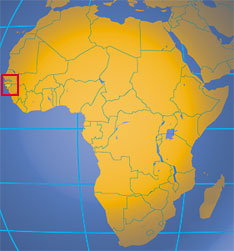
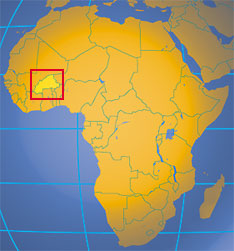
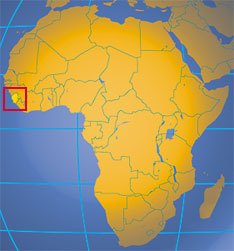
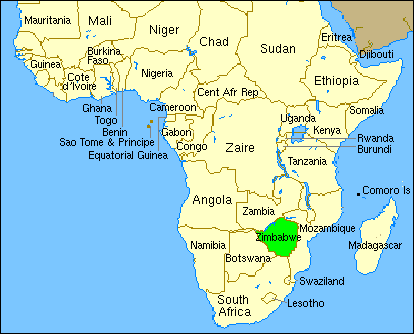
(note: Most of the country links will take you to a map of Africa with the country highlighted.)

Here's some interesting information about Malawi that I've collected as part of my pre-departure training and/or that I remember finding interesting during my BA.

Let's start with the most important detail of all (as far as my rural Canadian upbringing is concerned): the weather.
I will be arriving in Malawi at the beginning of the rainy season, which runs from
November to May. Though rainfall and temperatures vary (depending on altitude, nearness to the lake, latitude, etc.), the country averages 725-2500 mm of rain per year. The rainy season also happens to be the hottest part of the year (yay...) so it'll be nice and humid when I arrive. That being said, all the weather sites I've checked say that temperatures don't tend to go much higher than the high thirties, so it might not be so bad.
The dry season tends to be cooler (depending on where you are, it can get down to about 6 degrees Celsius at night), with daytime highs capping around 25 degrees Celsius.

Anyway, the political science nerd in me wants to move over to the facts and figures, so here we go.

History in Brief
The Republic of Malawi gained independence from Britain in 1964 (after decades of effort on the part of Malawians to establish an independent state). From 1964 to 1994, the country was governed as a one-party state by "His Excellency the Life President Ngwazi Dr. Hastings Kamuzu Banda."
I'm going to gloss over Malawian politics for now (mostly because they're fascinating and I want to devote a whole post to them later). Suffice to say that the country has had two presidents since Dr. Banda. The current president is Bingu wa Mutharika and the next general election (presidential and national assembly) is slated to take place in May 2009.
Malawi currently ranks 164/177 on the UNDP Human Development Index (HDI): it is therefore categorized as a country with "low human development" and is considered to be one of the twenty poorest countries in the world (the three poorest/least developed being Guinea-Bissau, Burkina Faso and Sierra Leone). (more on the HDI later) In 2006, Malawi was approved for relief under the Heavily Indebted Poor Countries (HIPC) program through the World Bank.
Agriculture (especially tobacco) accounts for more than one-third of Malawi's GDP and 90% of export revenues.

Fun(ish) Facts

Offical Languages: English and Chichewa

Capital city: Lilongwe

Biggest city/Urban economic centre: Blantyre

Geographic size: 118,480 sq km (the CIA world factbook helpfully informs us that this is slightly smaller than the state of Pennsylvania)
est.

Population: 13,931,831 (compared to Pennsylvania's 12,440,621)

Life Expectancy:
total population: 43.45 years
male: 43.74 years
female: 43.15 years

Religions:
Christian 79.9%, Muslim 12.8%, other 3%, none 4.3%

Literacy: (defined as those age 15 and over can read and write)
total population: 62.7%
male: 76.1%
female: 49.8%

Per capita GDP (PPP): $800 (Canada's is about $38,400)

Major exports: tobacco, tea, sugar, cotton, coffee

Major imports:food, petroleum products, consumer goods, transportation equipment

Economic aid: recipient of approx. $575.3 million annually

External debt: approx. $894 million (Canada's currently sits at about $758 billion - not that it's a helpful comparison, really)

Currency: Malawian kwacha (MWK)

Current exchange rate: Malawian kwachas per US dollar - 144.400

Interesting Trivia
One of the most striking geographic features of the country is Lake Malawi (aka Lake Nyasa if you're in Tanzania) which runs along the eastern border of most of the country. Lake Malawi is the ninth largest lake in the world and part of the East Rift Valley lakes system. Lake Malawi is also one of the most biodiverse freshwater systems in existence, hosting more fish species than any other single lake in the world.

Malawi has a national cricket team which has placed fourth at the African championships in two consecutive appearances.

On August 16, 1914, Lake Malawi saw a brief naval engagement when the British gunboat Guendolen, commanded by Captain Rhoades, heard that World War I had begun and received orders to "sink, burn, or destroy" the German Empire's only gunboat on the lake, the Hermann von Wissmann (at the time, Malawi was the British protectorate Nyasaland and Mozambique/Tanzania were the German protectorate known as German East Africa(. Rhoades's crew located the Hermann von Wissmann and disabled it with a single shot from a range of 2,000 yards. Apparently, it was a big deal at the time.

HIV/AIDS prevalance (as of 2003) stood at about 14.2% with an estimated 900,000 people living with AIDS. Malawi has the 8th highest prevalence rate in the world, behind Swaziland, Botswana, Lesotho, Zimbabwe, South Africa, Namibia and Zambia. In 2003, the annual estimate of HIV/AIDS related deaths stood at 84,000.

Travel Advisory: There is no official warning at this time. Travelers are, however, advised to "exercise a high degree of caution."

Sigh... yes, Malawi is perhaps best known at the moment for being home to Madonna's adoption saga.

(thanks to the CIA World Factbook, Wikipedia, voyage.gc.ca,certain pages maintained by the Government of Malawi including the National Statistics Centre and various arms of the United Nations.

As sure as it gets.

Looks like I'll be working with PlanMalawi in the water & sanitation sector of developmenty-type things.

I'll be posting some additional info later. Right now I have to call my mom and dad! :)

DISCLAIMER

The point of this blog is to share my experiences and perspectives on my experiences as an OVS, the politics of my world, the wonders and tragedies of my communities, and anything else that finds its way into my average little head. Keyword: "my."

The opinions expressed on this blog represent my own and not those of my employer or any organization I may be affiliated with.

In addition, my thoughts and opinions change from time to time. I consider this a necessary consequence of having an open mind and a natural result of the experiences that this blog chronicles.
Furthermore, I enjoy reading other peoples' blogs, and commenting on them from time to time. If you run across such comments, the opinions expressed therein also represent my own and not those of my employer or any organization I may be affiliated with, nor should you expect the views in those comments to remain static for all time. Feel free to draw your own conclusions about my formal political leanings and affiliations from the slant of those blogs, with the understanding that those conclusions are probably wrong.

(props to daveberta for inspiration on the wording)